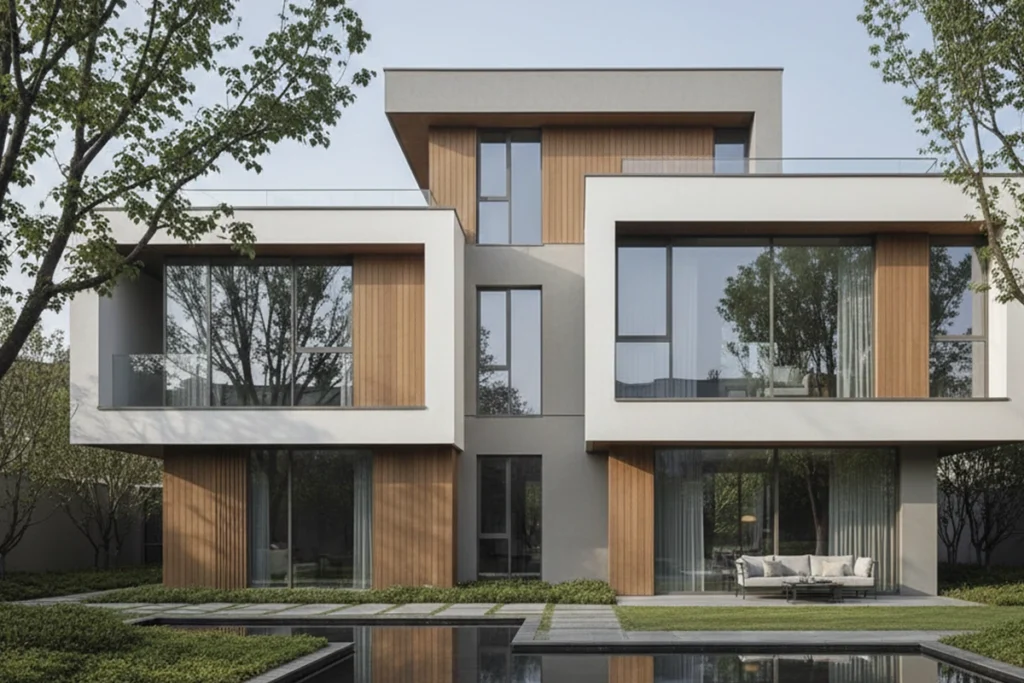
Until a few years ago, energy efficiency was seen as a purely technical detail, often relegated to the last page of a property listing.
Today, that is no longer the case.
Energy performance has become a central value factor, influencing a property’s market price, running costs, long-term appeal, and even access to financing. This is not only about complying with regulations or anticipating future obligations—it is about designing and living more consciously.
But what does energy efficiency really mean today?
And why is it misleading to consider it merely a regulatory constraint?
Energy Performance: From Technical Requirement to Decision-Making Criterion
Over the past few years, the way people choose a home has changed significantly.
Buyers and homeowners no longer focus solely on size, location, and finishes—they are asking new questions:
- How much will it cost to live in this home over time?
- Will it still be attractive in 10 or 15 years?
- Is it efficient, or will it quickly become outdated?
- How dependent is it on energy consumption and maintenance?
Energy performance offers a clear, synthetic answer to all these questions.
It does not only measure how much energy a building consumes, but how well it has been designed to function over the long term.
That is why today it is increasingly perceived as:
- a quality indicator,
- a safeguard for property value,
a guarantee of comfort and sustainability.
What Energy Performance Really Measures (and What It Doesn’t)
One important clarification is needed right away:
energy efficiency does not measure luxury, but performance.
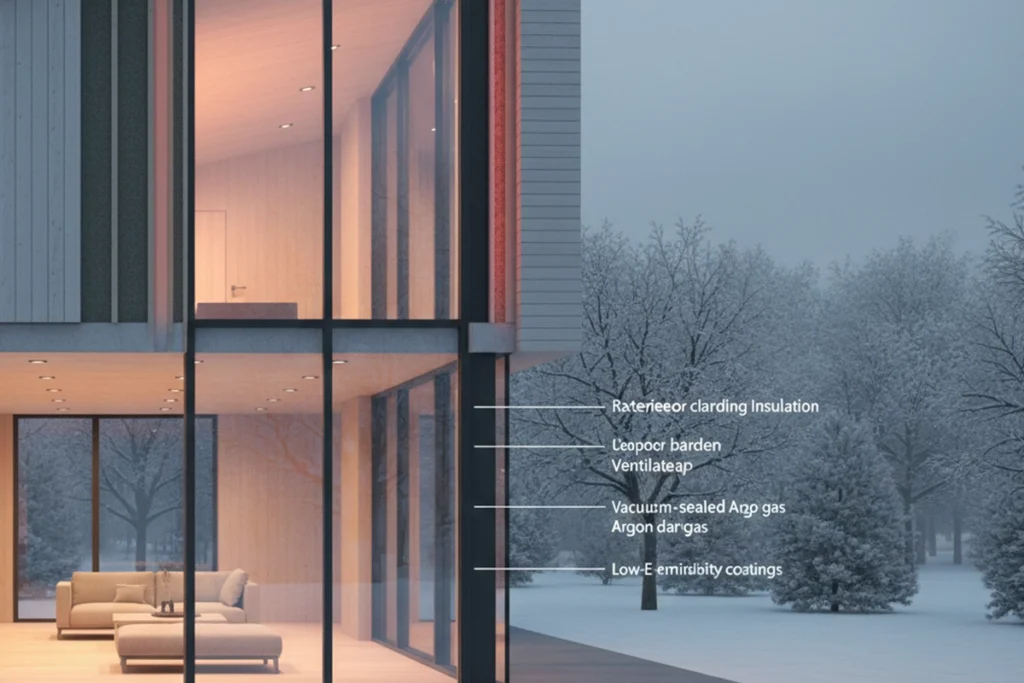
It is determined by evaluating several factors, including:
- the building envelope (walls, roof, windows),
- the efficiency of systems and installations,
- the type of energy sources used,
- overall heat loss and energy demand.
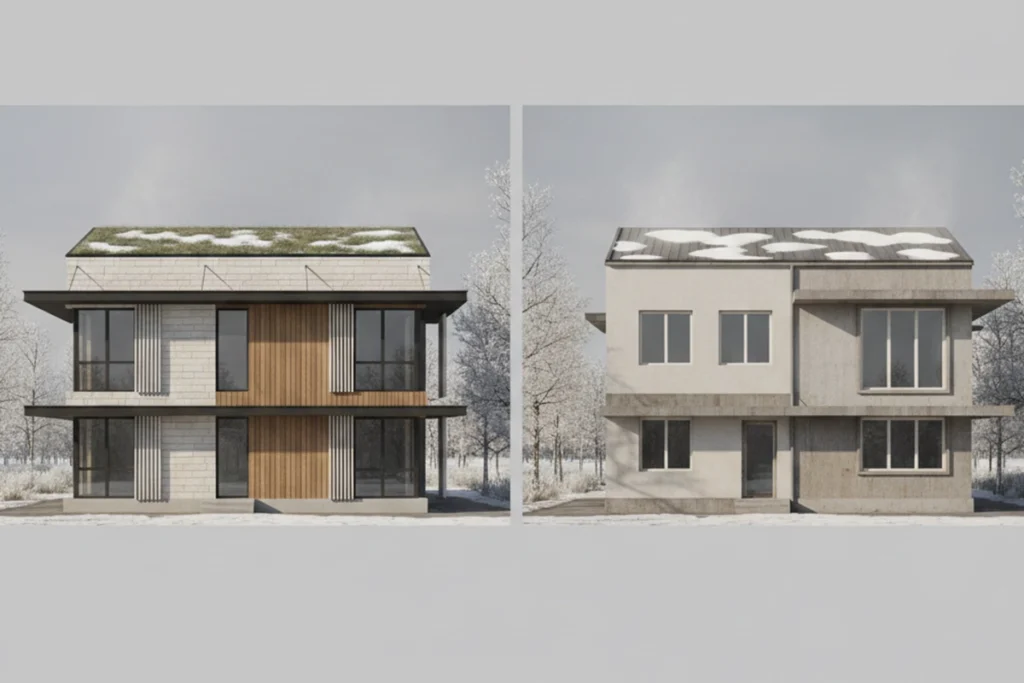
A home rated A or A4 is not necessarily larger or more luxurious in terms of finishes—it is simply designed to reduce waste, dispersion, and energy dependency.
And this is precisely what makes the difference today.
Regulations: What Is Certain and What Is Still Evolving
In recent months, much has been said about European directives and future “obligations.”
Clarity is essential.
What Is Certain
- The direction is clear: Europe’s building stock must gradually become more energy-efficient.
- New constructions are already subject to very high performance standards.
- Energy performance increasingly affects bank valuations and mortgage assessments.
What Is Not Yet Fully Defined
- Timelines and implementation methods for existing buildings vary by country.
- Several aspects are still being transposed into national legislation.
This leads to an important conclusion:
we are not facing an emergency, but a transition.
Those who design or invest wisely today can anticipate change—rather than be forced to react later.
Why Energy Efficiency Directly Impacts Property Value
An energy-efficient property is not only more sustainable—it is also more liquid on the market.
In recent years, several consistent trends have emerged:
- high-efficiency homes sell faster,
- they retain value more effectively over time,
- they are more attractive to investors and families alike.
This happens because they offer:
- lower and more predictable running costs,
- higher levels of comfort,
- a perception of being “future-ready.”
By contrast, inefficient buildings risk:
- declining attractiveness,
- costly upgrades in the medium term,
- progressive depreciation.
In this sense, energy performance is not an obligation—it is a form of asset protection.
Energy Efficiency and Real Living Costs
One of the most underestimated aspects of energy performance is its impact on daily living costs.
An efficient home:
- requires less energy for heating and cooling,
- maintains stable indoor temperatures,
- reduces exposure to energy price volatility.
This results in:
- lower utility bills,
- greater comfort throughout the year,
- less stress in day-to-day management.
These are not abstract numbers, but real living experiences.
That is why energy efficiency is increasingly considered not an optional upgrade, but a basic requirement.
The Role of Design: Energy Efficiency Starts on Paper
A crucial but often overlooked point is this:
energy performance cannot be added at the end of construction.
It is defined at the design stage.
Decisions such as:
- building orientation,
- spatial layout,
- material selection,
- integration between envelope and systems
have a much greater impact than any corrective measure applied later.
A well-designed building:
- works as a coherent system,
- minimizes the need for adjustments,
- achieves higher performance without forced solutions.
That is why talking about energy efficiency also means talking about design quality, not just technology.
New Construction or Renovation: Different Paths, Same Goal
Whether building new or renovating, energy efficiency has become a central objective.
New Buildings
- The entire structure can be designed as an integrated system.
- Higher performance levels are easier to achieve.
- Costs are more predictable from the outset.
Existing Buildings
- Constraints are greater.
- Careful evaluation is required between costs, benefits, and technical limits.
- Achieving the highest rating is not always realistic, but significant improvements are often possible.
In both cases, what matters most is making informed decisions, based on real analysis rather than generic promises.
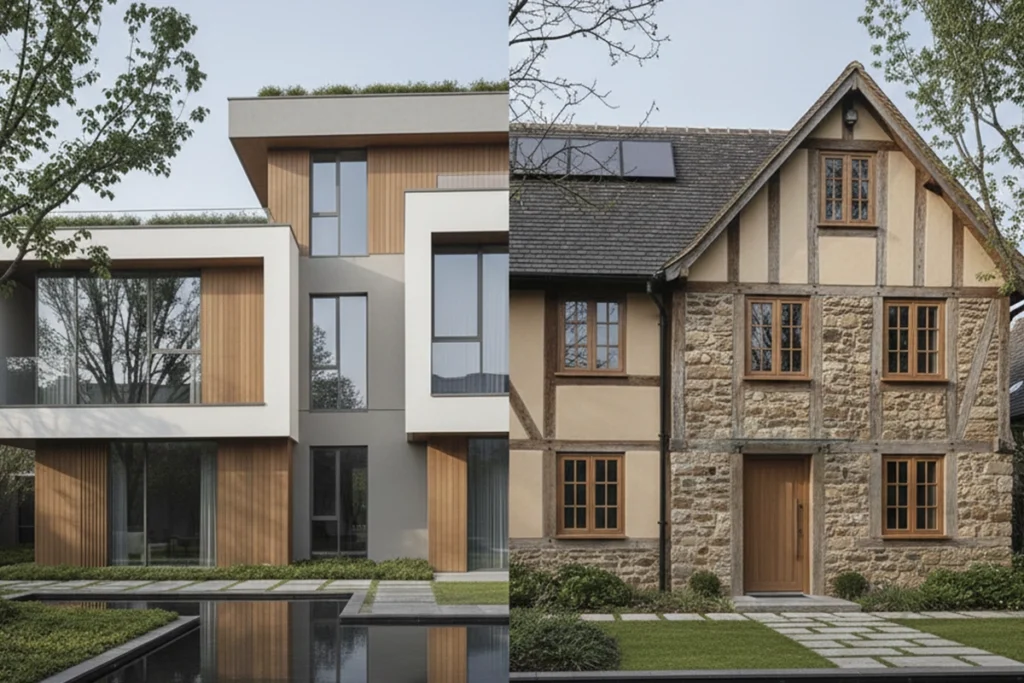
Energy Efficiency and Comfort: Two Sides of the Same Coin
An efficient building is not only virtuous on paper—it is also more comfortable to live in.
Insulation, controlled heat loss, and indoor air quality directly affect:
- acoustic comfort,
- thermal stability,
- overall health of indoor spaces.
Many common residential issues—cold drafts, overheating, condensation, uneven temperatures—are often the result of poor energy performance, not user behavior.
This is why energy efficiency is increasingly associated with a higher quality of living, not just a technical rating.
Looking Ahead: Designing Today to Avoid Catching Up Tomorrow
One of the most common mistakes is to design or purchase with only the present in mind.
But a home is a long-term investment.
Designing an energy-efficient building today means:
- reducing the risk of mandatory future interventions,
- preserving long-term property value,
- enjoying better living conditions immediately.
It is not about chasing the highest possible rating at all costs, but about adopting a long-term strategy, based on coherent design and technical choices.
Conclusion: Energy Performance as a Conscious Choice
Energy efficiency is no longer just a legal requirement or a number on an energy certificate.
It has become a value driver, summarizing design quality, living comfort, and future vision.
Living today means:
- making informed choices,
- thinking long-term,
- relying on solid, well-planned design rather than improvised solutions.
Because a well-designed home is not only more efficient—it is a home that ages better, preserves its value, and improves the quality of life for those who live in it.